
Sports betting rewards a repeatable decision framework more than it rewards clever picks. A Serbian player who runs their choices through a short, honest set of questions tends to end the season calmer than one who improvises on each weekend. This long piece lays out a full decision framework for sports betting choices, with the four decisions that structure every session, the questions that live inside each decision, and the small corrections that keep the framework from decaying into habit.
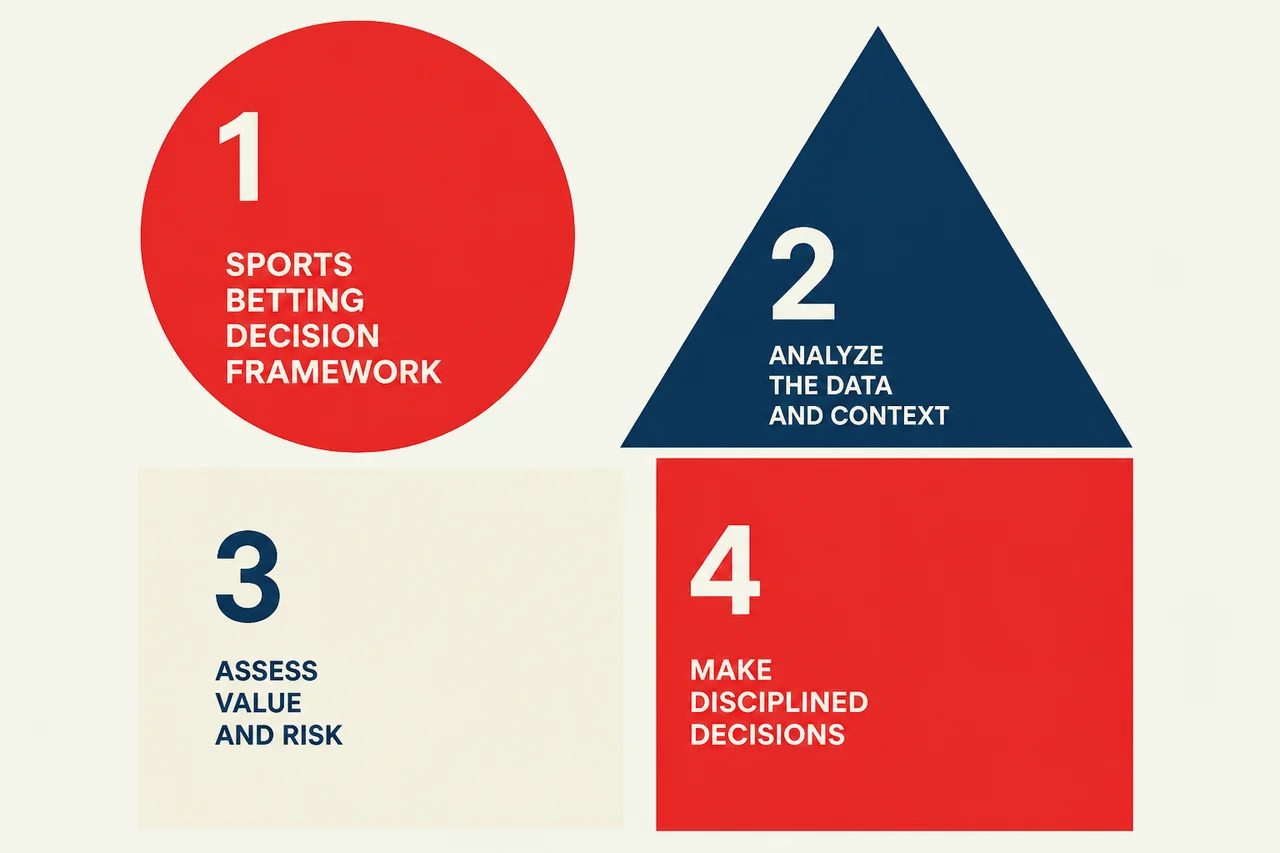
The framework is designed to be fast. The whole thing fits on one page once you have internalised it, and the first time through takes under five minutes per session. The intent is not to slow the hobby down but to make the choices visible, which is where the real savings live.
| Decision | Key question | Fail condition |
|---|---|---|
| 1. Operator choice | Is it on the Serbian licensed roster | Unlisted brand |
| 2. Session budget | Does it fit the monthly limit | Breach triggers cool-off |
| 3. Market selection | Does the market answer my question | Wrong market shape |
| 4. Stake size | Is it a flat planned stake | Tilt doubling |
Decision One Is the Operator Choice
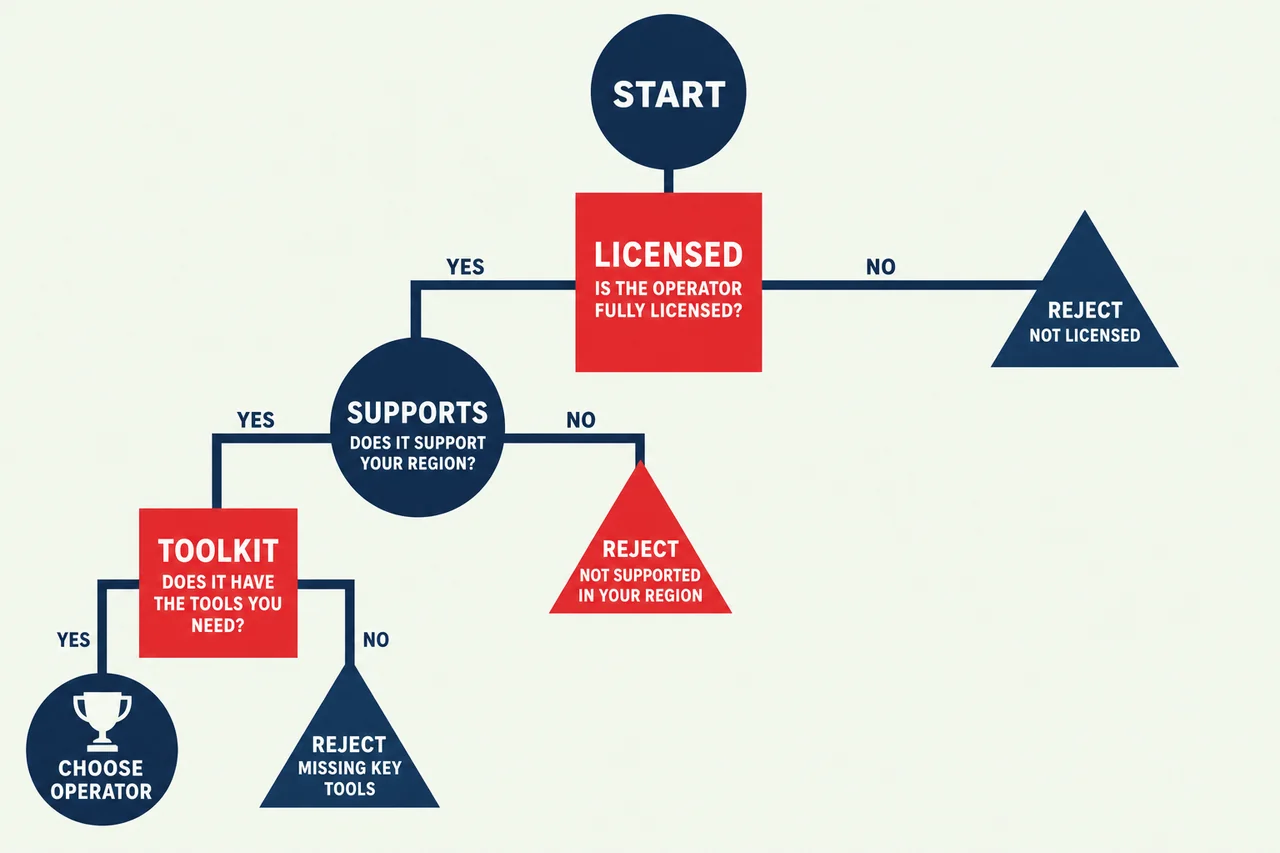
The first decision is the easiest to get right and the most consequential to get wrong. Pick an operator from the public register of the Games of Chance Administration under the Ministry of Finance. The register is the primary source. Everything else in the framework assumes this first decision has been made in favour of a licensed site.
Reality check. A licensed site is not a guarantee of value. It is the floor beneath every subsequent decision in the framework.
- On the Serbian licensed roster
- Supports a clean payment channel
- Carries the sports you follow
- Responsible-play toolkit visible in the account menu
An unlicensed operator may offer a better welcome bonus. It will not offer the EUR 300,000 deposit backing a player balance, the real-time IT exchange with the Serbian regulator, the KYC and self-exclusion register shared across the licensed market, or the IP and site blocking the Serbian framework applies to unlicensed access since January 2025.
The Short Checklist for Operator Choice
A short checklist for the first decision runs through five items: is the operator on the licensed register, does it support a payment channel you are comfortable using, does it carry the sports you plan to follow, does it offer the responsible-play toolkit visibly in the account menu, and does its support team respond to a test question within a reasonable window. Each item is a fail-fast question; a no on any one is usually enough to pick a different operator.
A guide such as buraz bet is a good thing for a Serbian player because it covers only operators on the licensed roster, with notes on current promotions, payment options and support quality. The guide collapses what would be a weekend of comparison into a reading step before the account form opens.
How Often to Revisit the Decision
Revisit the first decision once per season. Operator quality drifts: payment channels get cleaner or messier, support quality shifts with staffing, promotion generosity changes with the competitive environment. A quarterly revisit is more than enough; a monthly revisit is probably excessive. The point is to catch meaningful drift without opening three new accounts a season.
Decision Two Is the Session Budget
The second decision is the money question. The session budget is a smaller window inside the monthly deposit limit. If the monthly limit is twelve thousand RSD, a reasonable weekend session budget is one to three thousand depending on how many sessions the month holds for you.
Note. The session budget is the single most under-used lever in casual Serbian betting routines.
- Divide the monthly limit by weekends available
- Subtract a buffer for midweek fixtures
- Round to a clean figure and leave it there
The question that sits inside this decision is specific. Does the session budget fit the monthly limit with room for the rest of the month. If the answer is yes, place the ticket. If the answer is no, close the app. There is no third option that keeps the framework honest.
What the Session Budget Protects Against
The session budget protects against the single most expensive drift in the hobby, which is a weekend ticket that silently eats a month of planned entertainment credit. A Serbian player who starts the weekend without a specific session budget tends to stake incrementally larger across the two days, often without noticing it until the account history is read on Sunday evening.
Research summarised by GambleAware on anchoring and commitment devices has repeatedly shown that pre-set budgets outperform intention-driven budgets. The pre-set figure is a quiet constraint; the intention-driven figure drifts under pressure.
How to Size the Session Budget Honestly
A simple rule works for most Serbian casual players. Divide the monthly deposit limit by the number of weekends in the month, then subtract a buffer for midweek fixtures. If the monthly limit is twelve thousand and you plan to bet across four weekends with a modest midweek allowance, the session budget per weekend sits around two thousand five hundred.
The number can be clumsier than it looks. Round it to a round figure and leave it there for a month before adjusting. Fine-tuning session budgets during the month is one of the quiet routes to the drift the framework is designed to prevent.
Decision Three Is the Market Selection
The third decision is the market question. Markets are not interchangeable; each one answers a specific question, and the single most useful habit a Serbian player can build is matching the market to the question they actually want to answer.
Observation. The right market is almost always more valuable than the right side. The honest Serbian player checks the question first.
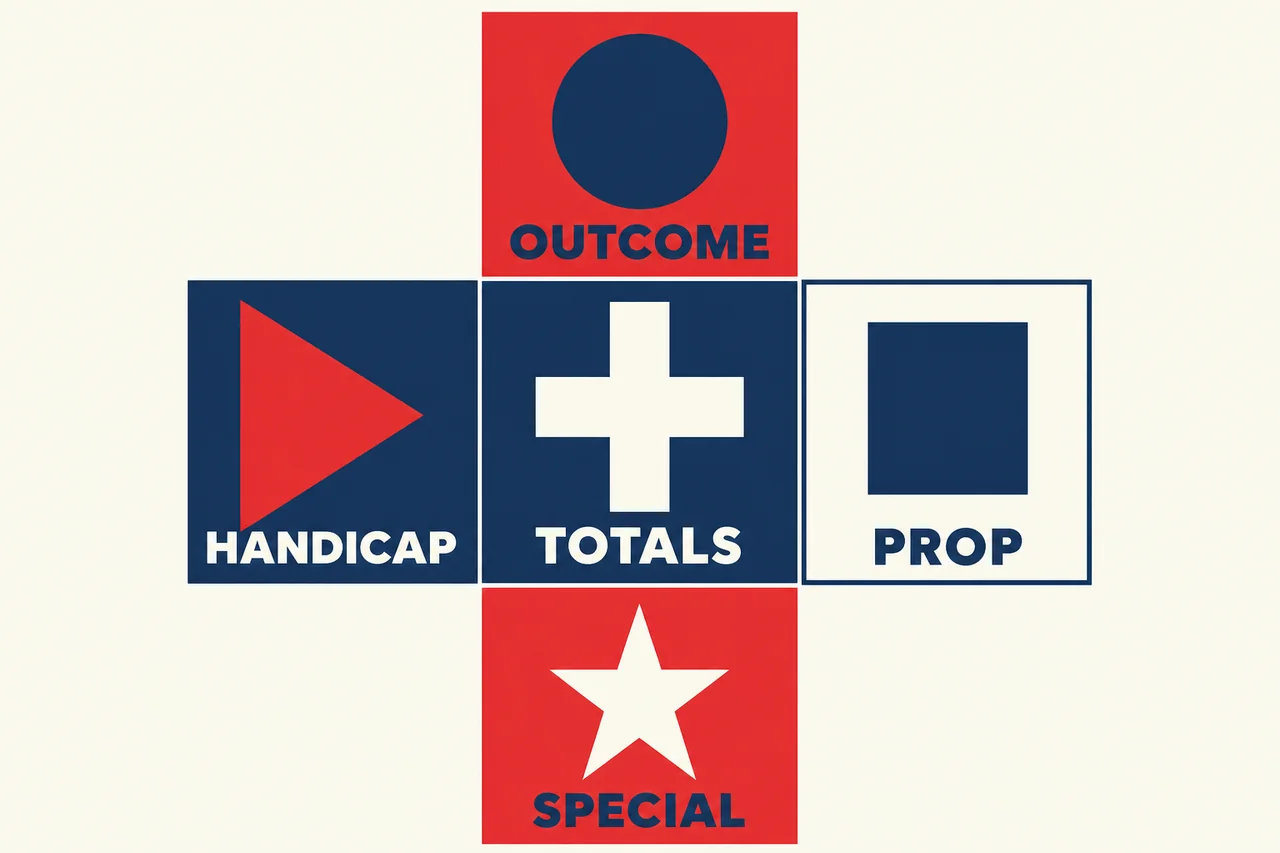
| Your question | Natural market | Common mistake |
|---|---|---|
| Who wins the match | Match outcome | Switching to handicap for a nicer price |
| How many goals or points | Totals | Picking a line without checking recent form |
| Will the favourite dominate | Handicap | Picking a start that doesn’t match the gap |
| Will a specific player perform | Player prop | Correlating with the main market |
| Will a specific event happen | Special | Treating entertainment as expected value |
Why the Market Question Matters More Than the Side
Picking the right market is often more important than picking the right side. A correct read of the match placed in the wrong market quietly costs the Serbian player margin without feeling like a mistake. The classic example is a correct read on a tight European match placed in the correct score market when the question was really about the match outcome.
The correction is simple. Write the question down before opening the slip. If the question is “who wins”, the market is match outcome. If the question is “how many goals”, the market is totals. Everything else is a market that is answering a different question and will carry different margin.
Decision Four Is the Stake Size
The fourth decision is the stake question. For a Serbian casual player, flat staking is almost always the right answer. The same stake per ticket produces the cleanest monthly ledger and the fewest emotional surprises across a season.
Tip. Flat staking is the quiet default that keeps the framework honest across a season of volatile weekends.
| Stake test | Pass condition |
|---|---|
| Flatness | Same as every other weekend ticket |
| Session fit | Within the current session budget |
| Market match | Answers your written question |
| Deviation discipline | Written down on Monday if used |
The question that sits inside the stake decision is just as specific as the earlier ones. Is this the same stake I use on every weekend ticket, placed inside this weekend’s session budget, on a market that answers my written question. If the answer is yes on all three, press confirm. If the answer is no on any of them, pause.
Why Flat Staking Is the Honest Default
Flat staking removes the main route to tilt doubling. A Serbian player who doubles a stake after a loss has silently abandoned the framework; the bet is no longer answering a match question but an emotional one. The ledger reads this clearly across a season, and most of the heaviest losing months in casual betting histories involve stake drift rather than bad picks.
Variable staking strategies exist and have places in professional bankrolls. For a casual Serbian weekend player, the extra sophistication rarely pays for the extra cognitive load. The flat stake sits inside the session budget and the session budget sits inside the monthly limit, which is the chain the framework is built to protect.
When to Deviate From the Flat Stake
Rare deviations from the flat stake are acceptable but need to be deliberate. A derby weekend ticket at a slightly larger stake is defensible if the decision is made and written down before Thursday. A spontaneous stake increase on a Saturday afternoon is almost always a drift signal rather than a reasoned deviation.
The honest test is whether the deviation would have made sense on Monday. If yes, it is a reasoned deviation. If no, it is a drift. Writing the test down once and consulting it is enough to keep the stake decision clean through a season.
The Framework Across a Live Market
Live markets compress the four decisions into seconds. The operator choice has already been made. The session budget is already set. The market selection and stake size happen simultaneously under the pressure of a running match.
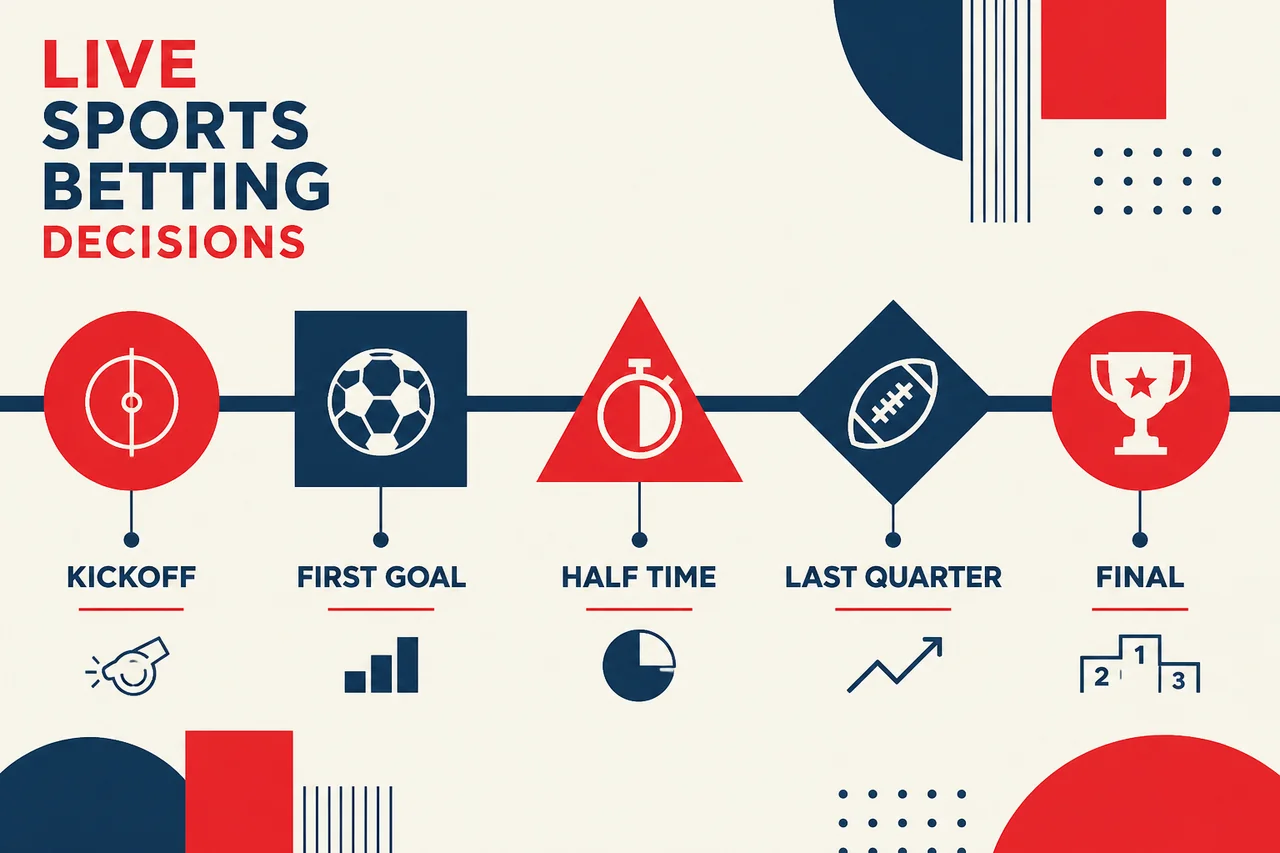
The practical correction for live markets is a per-match live-stake cap set before kickoff. The cap is a sub-budget inside the session budget. Three or four small live bets per match, each at a flat stake, within the per-match cap, is a stable live routine for a Serbian player. Anything beyond that is usually drift wearing a live-markets costume.
What Live Research Flags for the Framework
A UK study of in-play bettors summarised in The Conversation found that bettors who reported the most frustration used instant deposit features most and rated information panels most important. The pattern maps onto the framework as a drift signal: when the stake decision speeds up and the market selection narrows to “what the price is doing right now”, the framework has lost its ground.
The honest response is to close the live slip and let the match run. The framework survives the match; the drift does not survive the review.
Reviewing the Framework at the End of Each Month
A framework is only as useful as the review that keeps it honest. A monthly review walks back through the four decisions in reverse: were the stakes flat and inside the session budget, did the markets match the written questions, did the session budgets fit the monthly limit, did the operator choice still make sense.
Observation. The review is where the framework pays off. Skip the review and the framework decays into habit.
- Were stakes flat and inside the session budget
- Did markets match written questions
- Did session budgets fit the monthly limit
- Did the operator choice still make sense
Any no gets a short note. Over a quarter, patterns surface. A specific operator consistently fails the first decision. A specific sport consistently invites drift on the second. A specific market consistently traps the third. Catching these at ninety days protects the framework from quiet erosion.
What the Review Should Produce
The output of each monthly review is a short list of adjustments for the following month. Not a complete rewrite; just a specific tweak. The deposit limit might come down by ten percent. The session budget might shift to accommodate a new fixture schedule. The market selection might narrow to one or two markets with the strongest history.
Small adjustments compound. A Serbian player who runs this review for a season ends up with a framework calibrated to their own habits and their own ledger, which is more valuable than any generic template.
What the Framework Is and Is Not
The framework is a protective rail. It is not a system for finding value, not a method for picking winners, and not a replacement for the responsible-play toolkit. It sits on top of the toolkit and gives the player a structured way to make the four decisions each session asks for.
Takeaway. A protective rail does not pick winners. It keeps the hobby inside the shape you want it to have.
- Not a system for finding value
- Not a method for picking winners
- Not a replacement for the responsible-play toolkit
- Yes a protective rail on top of the toolkit
A player who runs the framework honestly ends seasons with a legible ledger, a stable deposit limit, a short list of lessons from each month, and a hobby that behaves the way they want it to. That is the real return.
Where the Framework Starts to Pay
The framework starts paying in the second or third month. The first month reveals which decisions feel natural and which feel forced. The second month shows which markets the framework steers away from. By the third month, the hobby runs on autopilot inside the rails, which is the quietly satisfying state the framework is designed to produce.
A full decision framework for sports betting choices is less about discipline and more about memory. The decisions, written once, remembered weekly, reviewed monthly, carry the hobby through a full Serbian season without needing willpower at the moments that matter.